How to Clean Baseboards the Easy Way (A Busy Mom’s Method)
Baseboards are the chore nobody notices until the light hits them just right, and then you can’t un-see the dust, the scuffs, and whatever the kids’ sneakers left behind. The good news: they don’t need fancy products. A vacuum, a bucket of warm soapy water and a microfiber cloth do almost all of it.
Here’s the method, step by step.
How to clean baseboards: the quick answer
Vacuum or dust the baseboards first, wipe them with warm water and a little dish soap on a microfiber cloth, use a soft brush for corners, lift scuffs gently, then dry them. Most homes only need a full clean every few months, with a quick dust in between.
| What you need | Why |
|---|---|
| Vacuum with a brush attachment (or a duster) | Removes loose dust so you don’t just smear it |
| Bucket of warm water + a few drops of dish soap | Gentle enough for painted and sealed trim |
| Microfiber cloths | Grab dust and dirt without scratching |
| Old toothbrush or soft detail brush | Corners, grooves and edges |
| Melamine sponge (“magic eraser”), optional | Scuff marks (test first, see below) |
| Dry towel | Prevents water spots and swelling |
Step by step
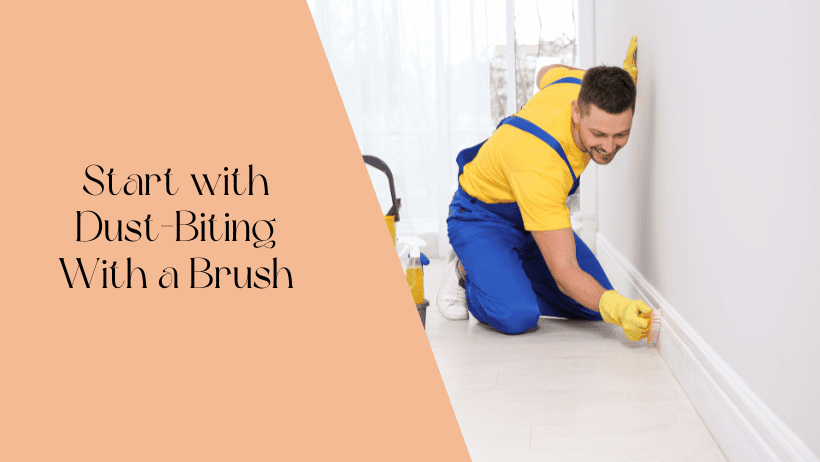
1. Dust or vacuum first
Run the vacuum’s brush attachment along the top edge and face of the baseboard. Getting the loose dust off first is the step that makes everything else faster. Skip it and you’ll be wiping mud.
2. Wipe with warm soapy water
Dip a microfiber cloth in warm water with a few drops of dish soap, wring it out well, and wipe in long strokes. Damp, not dripping. Too much water can seep into seams and swell wood or MDF trim.
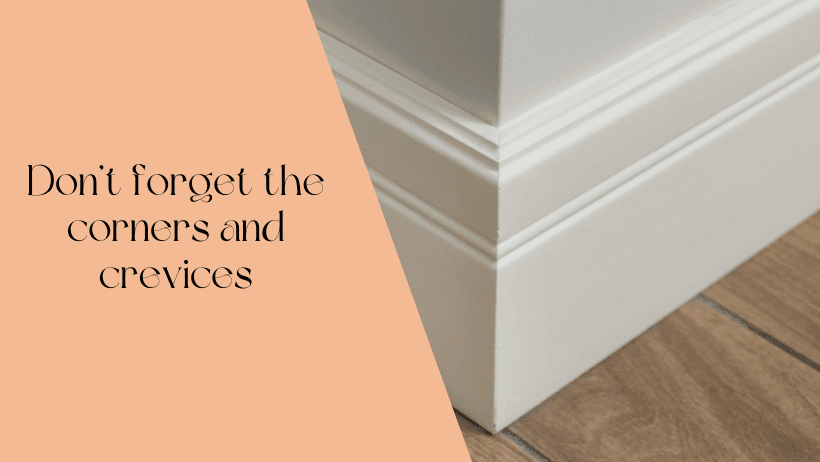
3. Get into the corners and grooves
Use an old toothbrush or a soft detail brush on corners, decorative grooves and the line where the baseboard meets the floor. A cotton swab works for tight spots.
4. Lift scuff marks gently
A barely damp melamine sponge takes off most scuffs. Rub lightly and test in a hidden spot first. It’s mildly abrasive and can dull glossy or satin paint.
5. Be careful around outlets
Near electrical outlets and cords, don’t spray anything. Put a little water on the cloth and wipe around them, keeping the cloth just damp.
6. Dry and finish
Go over everything with a dry towel. Dry baseboards stay cleaner longer, because damp spots grab new dust.

Kelleigh’s Quick Tip: Work one room at a time and move clockwise, so you always know where you started. With kids around, a room you can finish in 15 minutes beats a whole-house job that never gets done.
How to clean baseboards without bending over
- A microfiber flat mop or a dusting mop run along the baseboards takes care of dust while you stand.
- For washing, put a damp microfiber pad on the flat mop and wipe along the trim.
- Sit on a low stool or a cushion for the detail work instead of kneeling.
- Hand the kids a sock on each hand. Little ones are at baseboard height anyway, and dusting with a sock is one chore they can do safely. (No sprays for them, just a dry or barely damp sock.)
Cleaning different types of baseboards
| Type | Best approach |
|---|---|
| Painted (most homes) | Warm water and dish soap; melamine sponge for scuffs, tested first |
| Stained or natural wood | Dust, then a barely damp cloth or a cleaner made for wood; dry right away |
| Vinyl or rubber (cove base) | Warm soapy water; these handle a little more moisture |
| Peeling or chipped paint in an older home | See the safety note below before you scrub |
Safety notes
- Never mix cleaning products, especially bleach with ammonia or with acids such as some toilet bowl cleaners. The mix releases toxic gases. (CDC; Poison Control) Warm soapy water is all baseboards need.
- Older homes: if your home was built before 1978 and the baseboard paint is chipping or peeling, it may contain lead. The EPA advises against dry scraping or sanding lead-painted surfaces, and recommends wet wiping rather than dry dusting. (EPA)
- Store your cleaning supplies up high and locked away from little kids when you’re done. (CPSC)
How often should you clean baseboards?
- Dust them every couple of weeks, or whenever you vacuum (use the brush attachment as you go).
- Wash them every few months, or more often in high-traffic spots like hallways, kitchens and kids’ rooms.
- Spot clean scuffs and splashes as they happen. It takes thirty seconds when they’re fresh.
How to keep baseboards clean longer
- Vacuum along them with the brush attachment every time you vacuum the floor.
- Put a doormat at every entry, so less dirt gets tracked in.
- Wipe up drips and splashes in the kitchen and bathroom right away.
FAQs
What is the best way to clean baseboards?
Dust or vacuum first, then wipe with warm water and a few drops of dish soap on a microfiber cloth, use a soft brush in corners, and dry them afterwards.
What do professionals use to clean baseboards?
Mostly the same basics: a vacuum or duster, microfiber cloths, and a mild soapy solution, plus a detail brush for corners. Strong chemicals usually aren’t needed.
How do you clean baseboards without bending over?
Use a microfiber flat mop or dusting mop along the trim for dust, then a damp microfiber pad on the same mop for washing. A low stool helps for corners.
Can I use a magic eraser on baseboards?
Yes, for scuffs, but test it in a hidden spot first. Melamine sponges are mildly abrasive and can dull glossy paint.
How often should baseboards be cleaned?
Dust every couple of weeks and wash every few months. Busy areas and homes with pets or small kids may need more.
My take
Clean baseboards make a whole room look finished, and it’s one of the most satisfying jobs on the list because you see the difference right away. Dust first, keep the cloth damp rather than wet, and do one room at a time.
Questions? Email me at kelleigh@imperfecthomemaking.com.
Happy cleaning!