Are Bassinets Safe? 5 Simple Safety Tips
I know that safety is a constant thought when you have a baby to care for. But don’t worry! Bassinets are safe for infants, and under CPSC guidelines, they are the next best alternative when preparing a baby’s nursery.
So, for how long are bassinets safe to use?
- Until your infant turns 4 or 6 months old.
- If they roll over or start moving around sooner than that, then switch them to a sturdy crib.
- Bassinets also have weight limits that the manufacturer sets; it is usually 15 or 16 pounds.
But here’s something you should remember: bassinets are only safe as long as you follow guidelines. So, let’s look at some simple tips to keep your little munchkin safe when they sleep.
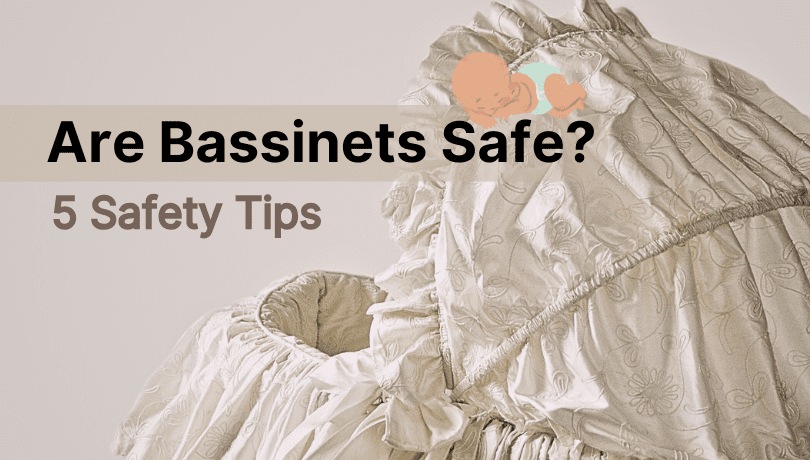
Table of Contents
5 Bassinet Safety Rules You Should Follow
I bought my first bassinet in 2014 before Fiona’s birth. I felt a bit nervous about it back then, and sought some guidance from my dear mom to stay cautious.
Just like me, I’m sure many of you are worried about how to use bassinets safely. So, let’s take a look at tips you can follow:
1. Ensure The Bassinet Is Stable
Today, many bassinets come with wheels or folding legs, making them easy to carry and move. Still, you need to be attentive while assembling or using it.

- Tighten the wheels if they’re loose and make sure you place the folding legs securely when using it.
- If you notice a strong wobble or shakiness that seems dangerous, contact your manufacturer/seller and ask for customer service.
- Even when you take bassinets while traveling, please don’t leave the wheels unlocked!
2. Say No To Heirloom Cradles Or Bassinets
You’re maybe attached to your family cradle used by your mother or grandmother, and you might want to use them for your little one.
- I wanted to use the same but then, I read about important safety standards. Old cradles or bassinets do not follow current safety practices. Therefore, please do not use them!
- The mattresses on heirloom bassinets are also thicker and puffy, while the bassinet’s legs are built with a latching mechanism that are all no longer safe to use.
3. Choose The Right Mattress And Sheets
A quality bassinet needs a firm and snug mattress to create a safe sleeping space. So, if you are buying a separate mattress for your bassinet, keep these in mind:
- Check if the mattress size fits your bassinet because bassinets don’t have a standard size. If you think it’ll be tough to find a mattress separately, buy the one with the bassinet.
- When assembling, look if the mattress fits snugly on the bassinet without gaps. This is crucial as it prevents your baby’s head from getting stuck or suffocating.
- Now comes the sheets! I always preferred breathable, lightweight, and waterproof ones, giving a tight fit and leaving no gaps.
Also, if you’re having trouble deciding on a bassinet, check out my post on What to Look for in a Baby Bassinet.
4. Place in a Safe Sleep Position
What could be the safest position, and why does it matter?

- Well, for you and me, it could be any position. But for your little love, it’s always on their back until they reach late infant hood.
- Sleeping on the stomach or either side may restrict their airway and cause breathing issues. This is also a major reason for SIDS in newborns!
5. Bare is Best
I’m sure you want to make your baby comfortable and happy. Keeping their favorite toys, cushions, or curtains in the bassinet may provide temporary joy, but it’s very risky!
- Bassinets have a limited weight capacity, and holding other objects beyond the mattress will exceed the weight limit.
- Keeping other objects can also make the bassinet unstable, and we do not want it to topple accidentally.
Beyond these safety precautions, it also helps to clean your bassinet and mattress now and then, to maintain it well. You can do some regular maintenance cleaning or deep-clean for spit-ups, blowouts, or stains.
Are Bassinets Safe: FAQs

1. Do Bassinets Prevent SIDS?
Bassinets are a safe sleeping environment for infants when used the right way.
– Bassinets help reduce the chances of SIDS and to keep your child completely out of harm’s way, it is necessary to follow other safety precautions.
– This includes using a firm mattress and letting your infant sleep only on their back to reduce risks of suffocation, entanglement, and SIDS.
2. Is It Safe to Put a Bassinet Next to the Bed?
Yes. There are different options to attach bassinets to the bed, and this is a much safer alternative to co-sleeping. To do this safely, make sure to do the following:
1. Keep it close! The bed and bassinet should attach completely, leaving no gaps. This prevents your baby from getting trapped.
2. Once you position it, check if the bassinet is stable and does not shake.
3. Never put soft toys, pillows, blankets, or additional sheets in the bassinet.
3. Can a Bassinet Mattress Be Too Hard?
Firm is the right type of thickness you should look for; neither soft nor too hard.
You can check for firmness by doing a squeeze test: just place a heavy object or run your hands over the mattress to ensure it doesn’t sag and that it eases back to its original shape.
4. Are Bassinet Covers Safe?
Yes. Bassinets come with mesh or organic covers that protect the mattress from spills and accidents.
1. Using bassinet covers is safe if they are fitted well and made with breathable materials like mesh or cotton fabrics.
2. The key to making it safe is to ensure that it fits well in every corner! Avoid loosely fitted sheets because that too can cause suffocation.
Concluding on Bassinets and Their Safety
So, yes, bassinets are definitely safe to use.
Remember to follow safety guidelines too. Use a bassinet that adheres to safety standards, observe good bassinet stability, choose the right mattress, and let your baby sleep in a safe sleep position, without any additional toys or pillows.
If you have more questions, please talk to your pediatrician and clear all your doubts before using them.
See you next time.