Are Bouncers Bad for Babies? An Honest Answer From a Mom of Six
I get a lot of questions from readers about whether bouncers are safe, usually after a scary post goes around online. I understand the worry. With six kids, I’ve used a bouncer a lot, mostly so I could make a quick meal or get a chore done with the baby right there where I could see them.
So are bouncers bad? Here’s what the experts actually say.
Are bouncers bad for babies? The quick answer
No, not when they’re used the right way: for short, supervised stretches while your baby is awake, on the floor, buckled in, and within the age and weight limits. The problems come from overuse, using one for sleep, or putting it somewhere it can fall. Pediatric physical therapists say bouncers can be helpful in moderation, as long as most of your baby’s day is spent on the floor. (HSS)
| Worry | What the experts say |
|---|---|
| Development delays | Not from short use. Overuse takes away floor time, which babies need to build strength |
| Hips | Research is mixed; avoid long stretches with legs held straight in the first months |
| Flat head | Long periods in any seat can contribute; limit seat time and vary positions |
| Sleep | Never. Move a sleeping baby to a flat surface |
| Falls | Keep it on the floor, never on a table, counter, bed or sofa |
| Shaken baby syndrome | Gentle bouncing doesn’t cause it; violent shaking does |

What the experts actually worry about
1. Too much time in the seat
The biggest concern is overuse. Babies learn to roll, sit and crawl by moving on the floor, and time in any seat is time not spent doing that. Pediatric physical therapists at the Hospital for Special Surgery say it’s fine to use one to free up your hands for a bit, but not to leave your baby there for hours. (HSS) The WHO says babies under 1 shouldn’t be strapped into any seat for more than 1 hour at a time. (WHO)
2. The idea that bouncers build strong legs
They don’t. The HSS therapists call it a misconception: babies in these devices aren’t really working their muscles, and bending and straightening their legs is a natural reflex. (HSS) Strength comes from floor play and tummy time.
3. Hips
The research on baby gear and hip health is still mixed, but the HSS therapists recommend care in the first six months, keeping the hips in a supported “frog” position rather than legs held straight for long periods. (HSS) They also suggest a simple check at diaper changes: gently bring your baby’s legs together and compare their length and the skin folds on the thighs. If anything looks uneven, don’t panic, but mention it to your pediatrician.
4. Flat spots
The AAP advises limiting time in swings, bouncy seats and car seats, because they press on the back of the head. (HealthyChildren.org, AAP)
5. Sleep
This is the big one. A bouncer isn’t a safe place for a baby to sleep. If your baby falls asleep in one, the AAP says to move them to a firm, flat sleep surface on their back as soon as you can. (HealthyChildren.org, AAP) More in Can babies sleep in a bouncer?
6. Falls
The CPSC lists falls from elevated surfaces as a known bouncer hazard. (CPSC) A bouncer can shift as your baby kicks, so it belongs on the floor.
Can a bouncer cause shaken baby syndrome?
When I was expecting Avery, my first, I read everything about baby care I could find, and shaken baby syndrome scared me. Here’s the reassuring part: it’s caused by violent, forceful shaking, not by gentle bouncing. The Mayo Clinic says shaken baby syndrome isn’t caused by things like bouncing a child on your knee. (Mayo Clinic)
A bouncer that moves with your baby’s own kicks, or with a gentle vibration, is nothing like that. Just keep the motion gentle.
If a crying baby ever pushes you to your limit (it happens to all of us), put your baby down somewhere safe, like the crib, and step away for a few minutes to calm down. The CDC recommends exactly that. (CDC)
Are bouncers safe for newborns?
Many bouncers are labelled for use from birth. For a newborn:
- Use it fully reclined, with any newborn insert that came with it.
- Buckle the harness every time.
- Keep sessions short, and stay where you can see your baby.
- Never let them sleep in it.
My bouncer rules
- No sleeping in the bouncer. If they doze off, they go to their crib.
- Never unattended. It sits where I can see the baby.
- Short sessions. About 15 to 20 minutes while I get something done, then floor time.
- Know the limits. Age, weight, and the moment they start sitting up.
- Always on the floor. Never on a table, counter, bed or sofa.
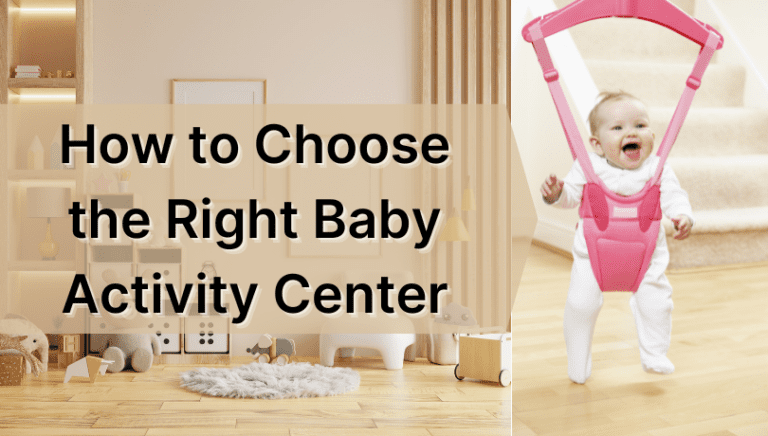
- Freestanding over doorway. I’ve always preferred a freestanding bouncer seat to a jumper that clips onto a door frame, and a wide, sturdy frame over a narrow one. (If you’re weighing up jumpers, see are baby jumpers safe?)
Kelleigh’s Quick Tip: Look up your bouncer’s model at cpsc.gov/Recalls, especially if it’s a hand-me-down. It takes two minutes.
Alternatives when your baby needs a change

- A play mat or baby gym for kicking, reaching and tummy time.
- A pack-and-play for a safe spot when you need a minute.
- Your arms. Holding, rocking gently and talking to your baby is still the best entertainment there is.
FAQs
Are baby bouncers safe?
Yes, when used for short, supervised stretches while your baby is awake, on the floor, buckled in, and within the manual’s limits. They’re not safe for sleep.
Are bouncers bad for a baby’s development?
Not in moderation. Problems come from overuse, which takes time away from the floor play babies need. Keep most of the day for floor and tummy time.
Can a bouncer cause shaken baby syndrome?
No. Shaken baby syndrome is caused by violent shaking, not gentle bouncing.
Are bouncers bad for babies’ hips?
Research is mixed. Pediatric physical therapists suggest avoiding long periods with the legs held straight in the first six months, and checking leg length and thigh folds at diaper changes.
Can newborns use a bouncer?
Many bouncers are labelled from birth. Use it fully reclined and buckled, for short supervised stretches, and never for sleep.
My take
Bouncers aren’t bad. They’re a tool, and like any tool they work best in moderation. Use one when you need your hands, keep it on the floor, buckle up, and give your baby plenty of floor time the rest of the day. That’s what the experts say, and it’s what’s worked in our house.
Questions about your own baby? Email me at kelleigh@imperfecthomemaking.com.
Happy parenting!
Related reading: