When Do Babies Hold Their Own Bottle? (What I Saw With Six Kids)
Six kids. Six totally different answers to this one.
Sawyer grabbed for her bottle early and wanted to do it all by herself. Theo? In no hurry whatsoever. And Fiona could hold hers just fine, she just mostly didn’t want to. She’d rather one of us did it.
So if your baby isn’t holding their bottle yet and you’re starting to wonder… take a breath. It’s a skill that shows up when it shows up. And trust me, there’s no gold star for the first baby on the block to do it.
When do babies hold their own bottle? The quick answer
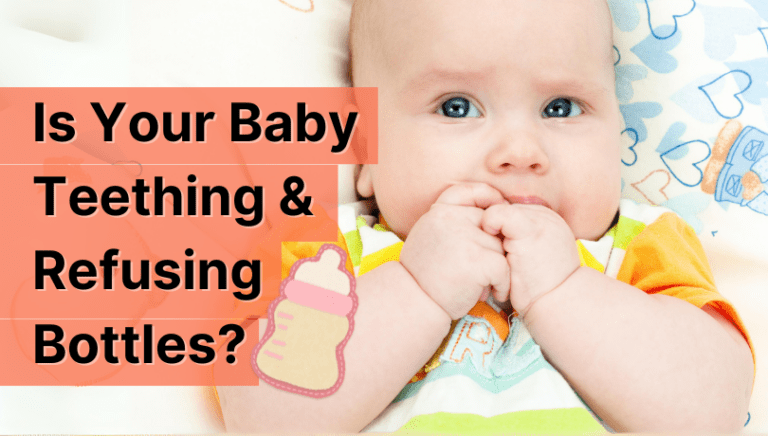
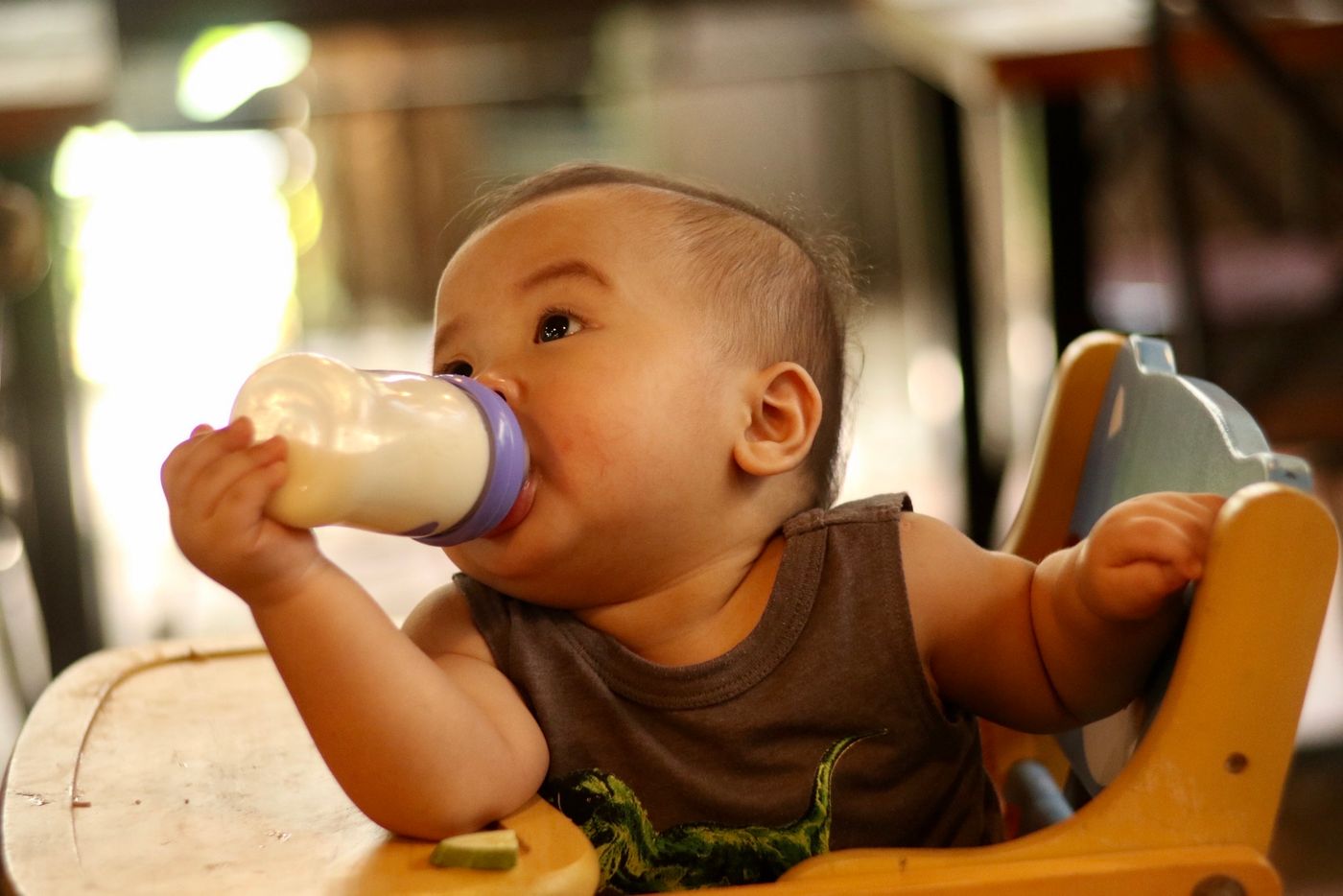
A lot of babies start helping somewhere between 6 and 10 months, once they can sit with a bit of support and get things to their mouth with both hands. Some are earlier. Some are later. And some never really bother, because being held is nicer! Holding a bottle isn’t one of the CDC’s developmental milestones, so there’s no deadline here. Whoever’s holding it, a grown-up stays for the whole feed, and bottles never get propped. (CDC milestones by 6 months; CDC milestones by 9 months; CDC bottle feeding)
When my six held their own bottles
All six of mine had bottles at some point. How often, though? That was all over the place.
Avery, Fiona and Teagan were mostly breastfed and got the occasional bottle of pumped milk. Aiden and Sawyer were combination-fed, so bottles were a regular thing for them. Theo had regular bottles too, with pumped milk or formula.
These ages are ballpark (I had six kids, not a spreadsheet):
| Child | First tried to help hold it | Held it for most of a feed |
|---|---|---|
| Avery | around 7 months | around 9 months |
| Aiden | around 6 months | around 8 months |
| Fiona | around 8 months | rarely held it for a whole feed |
| Teagan | around 7 months | around 9 months |
| Sawyer | around 6 months | around 7–8 months |
| Theo | around 8 months | around 10 months |
Sawyer was my earliest, and the most determined by a mile. Theo was the latest.
Then there’s Fiona, my “I can, but I’d rather not” baby. She was perfectly able to hold her bottle. She just generally liked one of us doing it better.
What babies need before they can hold a bottle
It’s not just about strong little hands. A few things have to come together first.
Sitting balance. By 6 months, the CDC says babies lean on their hands to prop themselves up when sitting. By 9 months, they’re sitting without support. (CDC, 6 months; CDC, 9 months)
Getting things to the mouth. Around 6 months, babies put everything in their mouths to explore it (everything!). Same move, different object.
Both hands working as a team. Plus enough strength to tip the bottle up as it gets emptier.
Actually wanting to. Some babies just like being held close for feeds. That’s fine. Really.
How to encourage your baby to hold their bottle
You don’t have to teach this. But you can make it a little easier for them.
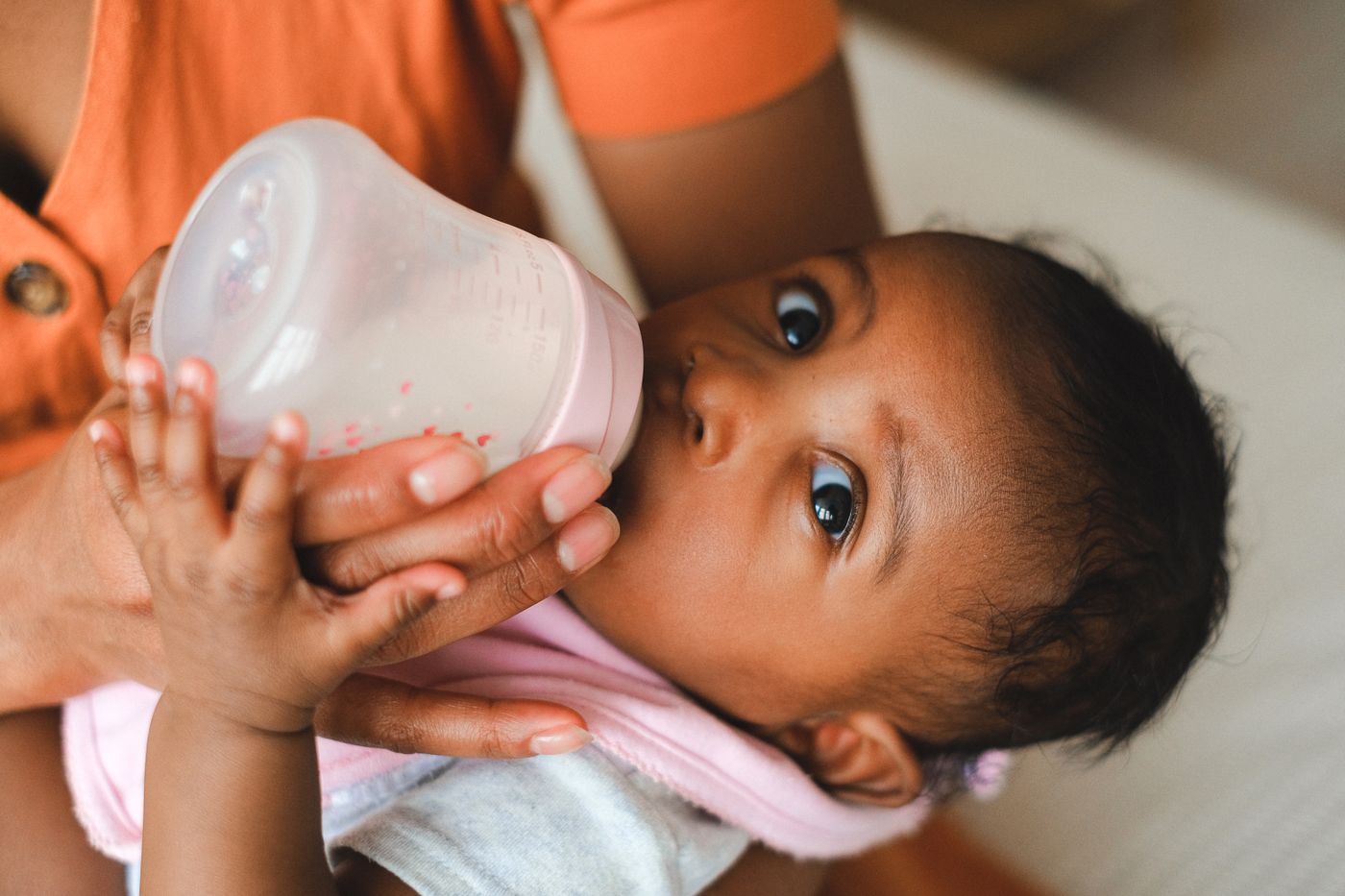
- Let them help. Put their hands on the bottle while yours are still on it. Then loosen your grip, bit by bit.
- Go smaller. A small bottle that’s half full is way easier for tiny hands than a big full one.
- Try handles. If your baby keeps reaching for the bottle but can’t quite hang on, a bottle with handles might help.
- Bring a cup to the table. Once solids start (usually around 6 months), the AAP says it’s time to offer a cup, so you can let them play with one at meals. (HealthyChildren.org, AAP)
- Keep them upright. Supported and fairly upright. Never lying flat.
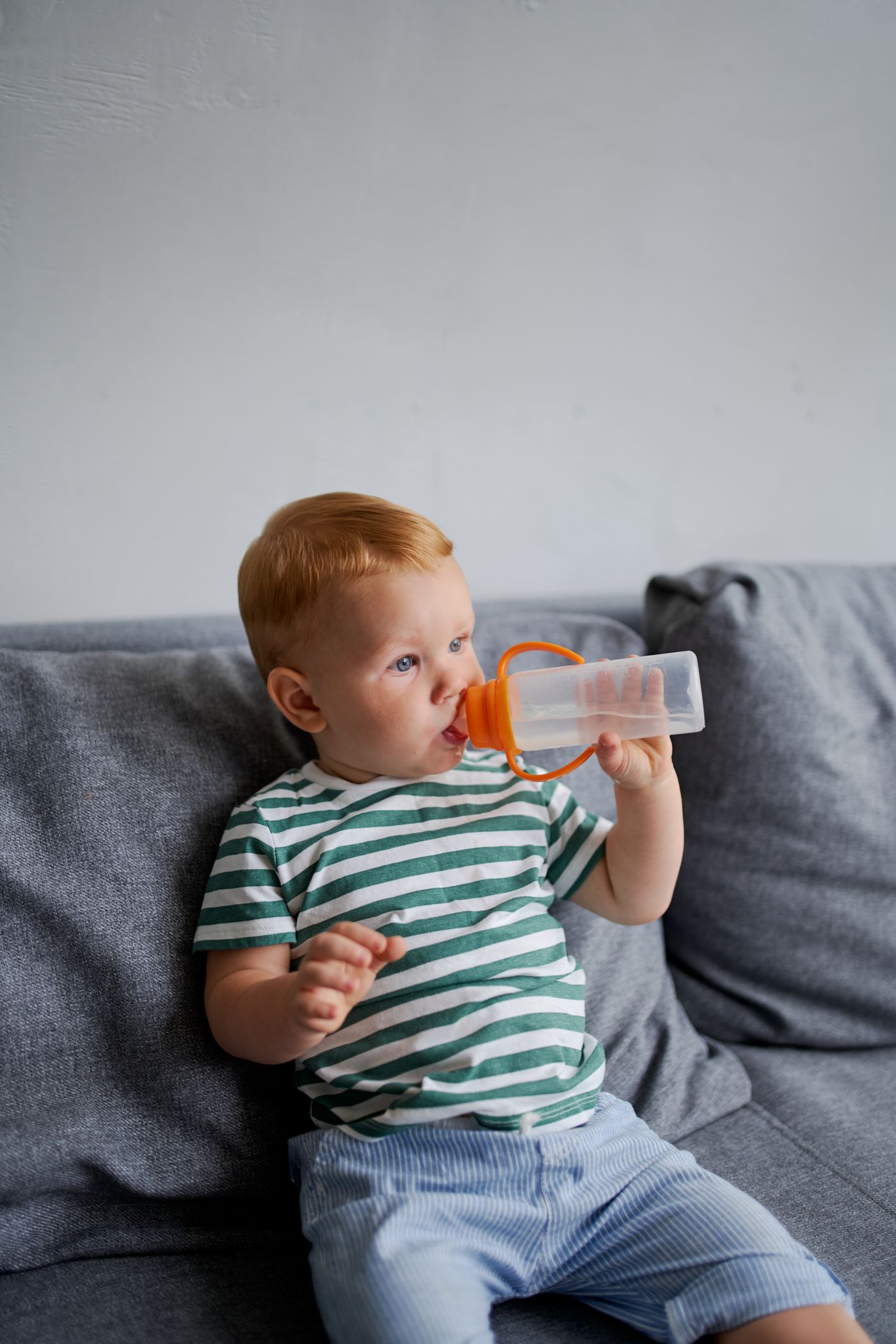
We went through different nipples and flow rates as each baby got bigger. Our older kids had regular plastic bottles, and by the time the younger ones came along we’d switched to wide-neck anti-colic ones.
Is it safe for babies to hold their own bottle?
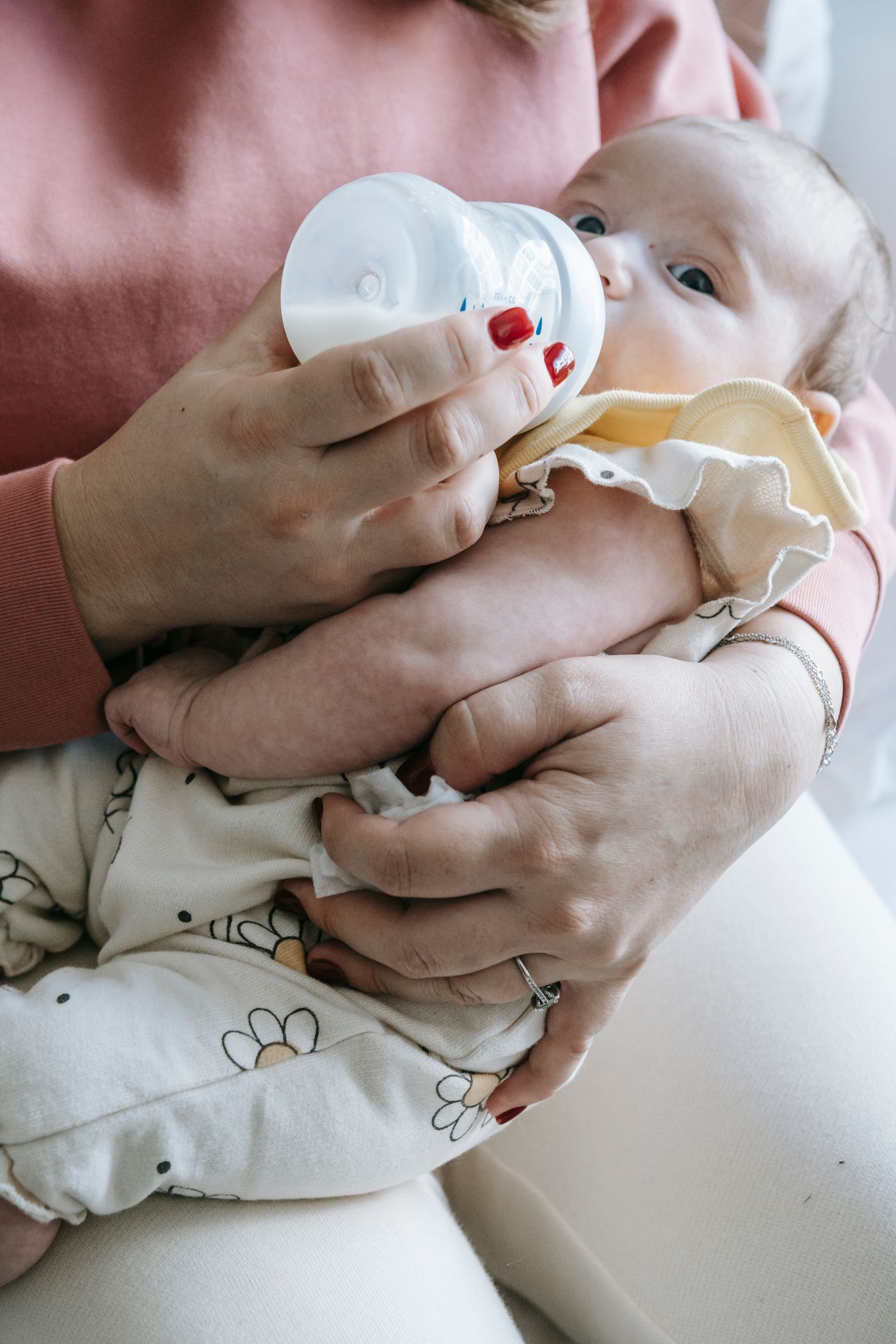
Yes! As long as you’re right there with them. A baby holding their own bottle is a whole different thing from a bottle propped up on a pillow.
Propping is the big no. The CDC says a propped bottle, or one left in baby’s mouth, can mean more risk of choking, ear infections and tooth decay. (CDC) Choking can be quiet too. So I always stayed where I could see and hear them.
Our house rules for bottles
- A grown-up stays for the whole feed. Every time.
- No propping. Not on blankets, not on pillows, not on anything.
- No falling asleep with a bottle. No bottles in the crib.
- Baby turns away? Feed’s over. Leftover milk and all. (CDC)
- Cracked or worn-out nipples and bottles go in the trash. (We checked them regularly.)
- Babies eat sitting supported and upright.
- A bottle isn’t a toy. Even once they can carry it around the house!
Kelleigh’s Quick Tip: The day your baby can hold their own bottle is not the day you get to leave the room (sorry!). Use your free hands for something better. Make eye contact. Chat with them. It’s still your bonding time.
Moving from bottle to cup
The AAP’s rough timeline goes like this. Cup on offer around 6 months. Bottle mostly gone somewhere in that 12 to 18 month window. Open-cup drinking by about 2. (HealthyChildren.org, AAP) They also suggest going slowly: keep bottles to mealtimes first, then drop the nap and bedtime ones too.
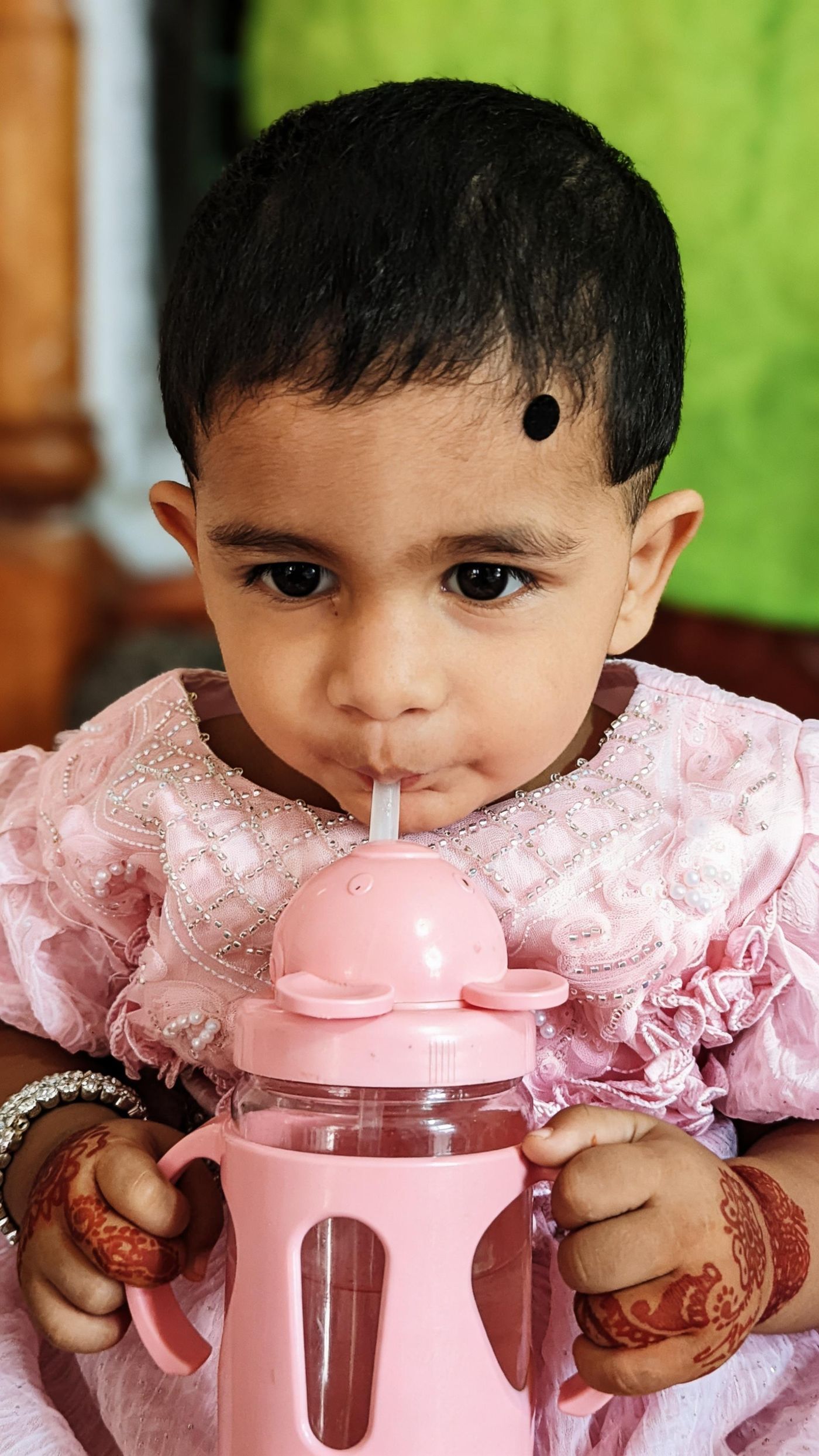
At our house, I’d bring in an open or straw cup at mealtimes once each kid seemed ready. Then we cut back on bottles a little at a time. No cold turkey.
Sawyer switched fast. Doing things on her own was kind of her whole personality! Theo took longer, and he hung on to his bottle for parts of his routine.
The drinking part? Easy. Letting go of the bottle routine was what took time.
When do babies hold their own bottle? FAQs
Can a 4-month-old hold their own bottle?
Maybe they’ll grab at it! But most babies that age can’t sit steady or coordinate both hands yet. You hold it for now.
My 10-month-old won’t hold their bottle. Should I be worried?
On its own, nope. You won’t find bottle-holding on the CDC’s milestone checklists, and plenty of babies just love being held. Got bigger worries about sitting, grabbing, or getting things to their mouth? Mention those to your pediatrician.
Should I make my baby hold their own bottle?
I wouldn’t push it. If they want to help, great. Either way, you stay with them and follow their cues.
Can my baby have a bottle in the crib?
That’s a no from me (and from the experts). Feed them, then lay them down. The bottle stays out of the crib.
When should my baby stop using a bottle?
Aim for somewhere between 12 and 18 months, per the AAP. Slow and steady is fine.
My take
Six kids, and bottle-holding showed up at all sorts of ages across the bunch. One of them (hi, Fiona) never cared much about doing it on her own at all. It comes down to coordination and preference. It’s not a parenting achievement. It’s definitely not a milestone worth rushing.
Baby’s not holding the bottle yet? Momma, you’re not behind. Stay close, keep feeds supervised, and it’ll come when it comes.
Questions? Email me at kelleigh@imperfecthomemaking.com.
Happy parenting!
Related reading: